


Organizations today depend on accurate and timely information to guide their daily operations and long term strategies. As data volumes continue to grow, managing this information manually becomes difficult and inefficient. Many businesses still rely on spreadsheets and manual reporting methods, which create delays and increase the risk of errors. These challenges affect productivity, decision making, and overall performance. Modern automated data workflows help organizations simplify processes, improve accuracy, and save valuable time. By gradually shifting from manual to structured systems, companies can build reliable data environments that support growth and innovation.
How manual data management slows down business processes
Manual data collection and reporting require constant human involvement. Employees spend hours gathering information from different platforms, updating files, and preparing reports. This process not only consumes time but also interrupts workflow continuity. When information moves slowly between departments, teams struggle to make quick and informed decisions.
Another issue is inconsistency. Different employees may follow different methods for storing and managing data. This lack of standardization leads to confusion and delays in reporting. Over time, these inefficiencies reduce operational speed and limit the ability to respond to market changes.
Why do repetitive data tasks increase operational risks
Repetitive processes often create hidden risks that affect business stability. Routine work can lead to fatigue, oversight, and reduced attention to detail. As workloads increase, employees may overlook critical errors or delays.
Improving workflow speed with automated data integration
Data Automation connects different tools and platforms, allowing data to move seamlessly across systems. This reduces the need for manual transfer and improves communication between teams. Real time integration ensures that employees always work with updated information.
Faster workflows support better planning, forecasting, and monitoring. Teams can identify problems early and respond quickly, which improves operational stability and customer experience.
Can structured data automation reduce human errors
Human errors in data handling are common and can lead to costly consequences. Typing mistakes, incorrect formulas, and missing values often go unnoticed until they affect reporting and decision making. Automated systems apply rules and validations that reduce such risks.
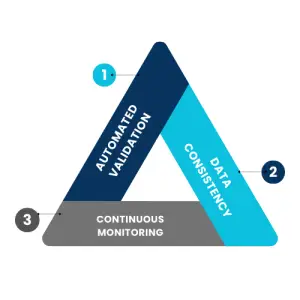
Automated validation
Systems automatically check formats, detect missing values, and identify inconsistencies before data is processed. This reduces the risk of errors entering reports and dashboards. It also lowers the need for manual correction and rework. As a result, businesses gain more reliable and accurate insights.
Data consistency
Standardized data structures ensure that all departments follow the same formats and rules. This improves clarity in reporting and makes comparisons easier across teams. Consistent data also reduces confusion and strengthens collaboration. It helps create a shared and trusted view of business performance.
Continuous monitoring
Automation enables real time monitoring of data quality across systems. Issues and anomalies are detected early before they affect decisions. This proactive approach prevents larger problems and improves operational stability. Ongoing monitoring supports long term reliability and trust in data.
Enhancing collaboration through reliable data systems
Reliable and accessible information improves collaboration across departments. When teams trust the data they use, communication becomes more effective. Automated workflows create transparency and reduce misunderstandings.
For example, finance, operations, and marketing teams can access shared dashboards and reports. This alignment helps organizations achieve common goals and improve coordination.
How does real time data processing improve business visibility
Real time access to information allows businesses to monitor performance continuously. Instead of waiting for periodic updates, leaders gain immediate insights into operations, customer behaviour, and financial trends.
Faster response
Organizations can quickly identify risks, opportunities, and performance gaps with real time insights. This allows faster action and reduces uncertainty in decision making. Teams can adapt to market changes and customer behaviour more effectively. As a result, businesses become more resilient and competitive.
Better forecasting
Accurate and updated data improves forecasting and planning across departments. Leaders can make decisions based on real conditions instead of assumptions. This reduces risk and supports long term strategy. Reliable forecasts also help in resource allocation and goal setting.
Operational control
Continuous monitoring improves visibility into daily operations and performance. Businesses can detect issues early and prevent disruptions. This helps maintain efficiency and stability across processes. Strong operational control supports consistent growth and better outcomes.
Building long term productivity through intelligent automation
Automation helps organizations move beyond short term efficiency. By reducing routine work, employees can focus on innovation, problem solving, and strategic growth. This shift improves job satisfaction and encourages creativity.
As businesses scale, automated systems handle increasing data volumes without compromising speed or accuracy. This supports sustainable growth and long term competitiveness.
What should organizations evaluate before adopting automated data systems
Successful implementation requires careful assessment of current workflows, technology readiness, and business goals. Companies must understand their data challenges and identify opportunities for improvement.
Process assessment
Understanding current workflows helps identify gaps, delays, and inefficiencies in data handling. This allows organizations to prioritize areas where automation can create the most value. A clear assessment also reduces risks during implementation. It ensures that new systems align with business goals and operational needs.
Change readiness
Employees need proper training and support to adapt to automated systems. Clear communication helps reduce resistance and builds confidence in new processes. When teams understand the benefits, adoption becomes smoother. This improves productivity and long term success.
Security focus
Protecting sensitive information is essential when managing automated data environments. Strong governance ensures compliance with regulations and reduces risks. Clear policies and monitoring help maintain data privacy and integrity. This builds trust with customers and stakeholders.
Conclusion
Automated data workflows are transforming how organizations manage information. By reducing manual effort, improving accuracy, and enabling real time insights, automation saves time and minimizes errors. These improvements enhance productivity, collaboration, and decision making across departments. As businesses continue to grow and rely on data, structured automation practices will become essential for building efficient and resilient operations.
Frequently Asked Questions (FAQs)
- How does automated data management improve efficiency in daily business operations
Automated data workflows reduce repetitive tasks and improve the speed of information flow. This allows teams to focus on strategic work while maintaining accuracy and consistency across systems. - What are the long term benefits of using structured data automation in organizations
Structured automation supports scalability, improves decision making, and enhances collaboration. It also helps businesses maintain reliable insights as data volumes continue to grow.
- How can organizations reduce errors while handling large volumes of business data
Automation applies validation rules, standard formats, and real time monitoring. These practices help prevent mistakes and improve overall data quality. - Why is real time data processing important for better business decision making
Real time insights allow organizations to respond quickly to risks and opportunities. This improves planning, forecasting, and overall operational control. - What challenges do businesses face when shifting from manual to automated data workflows
Common challenges include employee adaptation, system integration, and data governance. Proper planning and training help ensure a smooth transition. - How does data standardization support collaboration across departments
Standardized formats create a shared and trusted source of information. This improves transparency, communication, and alignment between teams.