


Digital-first business environment, data flows constantly from applications, transactions, customer interactions, and internal systems. What has changed is not just the volume of data, but the speed at which decisions are expected. Organizations can no longer rely on slow, manual handling of information if they want to stay relevant. This is where data automation and data modernization quietly reshape how businesses operate behind the scenes.
Data automation is not about replacing people. It is about removing friction from everyday data tasks so teams can work with information that is accurate, timely, and reliable. Automated data processing reduces repetitive work such as data entry, validation, transformation, and reporting. When these processes are handled by an automated data processing system, errors decrease and operational efficiency improves naturally.
What is data automation and how does automated data processing actually work?
Data automation refers to the use of technology to manage data-related tasks with minimal human intervention. These tasks include collecting data, validating it, transforming it into usable formats, and delivering it to dashboards or analytical tools. Automated data processing systems follow defined rules, workflows, or intelligent logic to ensure data moves smoothly across systems.
A common starting point for many organizations is data entry automation. Instead of manually entering information from invoices, forms, or applications, automation tools capture and validate data automatically. This not only speeds up processing but also ensures consistency across systems.
When people ask what is the best way to describe automation, the answer is simple. Automation is the systematic removal of manual effort from repeatable processes, allowing systems to operate faster and more accurately than humans can alone. The goal is not complexity, but reliability and scale.
Goal of automation in modern data environments?
The primary goal of automation is consistency. Manual processes vary depending on who performs them, when they are performed, and under what conditions. Automated systems follow defined logic every time, ensuring predictable outcomes.
Another key goal is speed. Automated data processing enables organizations to respond to changes immediately rather than waiting for end-of-day or weekly reports. This is especially important in environments where real-time insights drive operational decisions.
A less discussed but equally important goal is trust. When data automation best practices are followed, organizations develop confidence in their data. Clean, validated, and well-orchestrated data becomes a dependable asset rather than a constant source of reconciliation work.
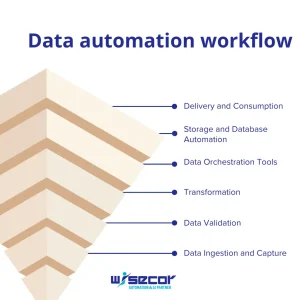
A well-designed data automation workflow connects multiple technologies and processes into a cohesive system. Each component plays a specific role in ensuring data flows accurately and efficiently.
- Data ingestion and capture
Automated systems collect data from applications, databases, and external sources without manual intervention. - Data validation and quality checks
Intelligent data processing ensures that incoming data meets defined standards before it moves forward. - Transformation and enrichment
Automated data processing systems clean, format, and enhance raw data to make it usable for analytics and reporting. - Data orchestration tools
These tools manage dependencies and execution order across workflows, ensuring that tasks run at the right time and in the right sequence. - Storage and database automation
Automated systems handle indexing, backups, performance tuning, and data availability. - Delivery and consumption
Data is delivered automatically to dashboards, reports, or downstream applications.
Data orchestration best practices focus on reliability, monitoring, and error handling. Without proper orchestration, automation efforts often fail due to broken dependencies or silent data issues.
How does data modernization support long-term automation success?
Data automation cannot thrive in outdated environments. Data modernization focuses on updating how data is stored, accessed, and governed. This often begins with modernizing legacy data systems that were designed for batch processing rather than continuous data flows.
A data modernization strategy typically includes moving toward a modern data architecture that supports flexibility and scalability. This may involve cloud platforms, distributed databases, and virtualization for data center automation. Virtualization for data center automation in cloud computing allows organizations to manage resources efficiently while supporting automated workloads.
A clear data modernization roadmap helps organizations transition gradually. Instead of replacing everything at once, teams can modernize critical systems first and expand automation as confidence grows. This reduces risk while delivering measurable improvements.
How does the role of AI change data automation today?
As data volumes and complexity increase, rule-based automation alone is often not enough. This is where the role of AI in data automation becomes relevant. Artificial intelligence adds context and adaptability to automated systems. Instead of following fixed instructions, AI-enabled automation can learn from historical data, detect patterns, and adjust workflows when conditions change.
A common question is what is an example of an intelligent automation solution. One practical example is intelligent data processing used in data quality management. Instead of relying only on predefined validation rules, AI models can identify unusual patterns, flag potential issues, and route data through corrective workflows automatically. This makes automation more resilient and reduces the need for manual intervention.
However, AI is most effective when built on a strong foundation. Without modern data architecture and reliable data orchestration tools, AI-driven automation becomes difficult to control. Successful implementations treat AI as an enhancement to well-designed workflows rather than a replacement for them.
Key data automation tools that support modern data management
Modern data automation relies on a combination of tools that work together as part of a larger ecosystem. Each category supports a specific stage of the data automation workflow.
- Data ingestion and integration tools
These tools collect data from multiple systems and enable automated data processing across environments. - Data orchestration tools
They control task sequencing, dependencies, and execution timing across complex workflows. - Database automation platforms
These handle performance tuning, scaling, backups, and availability without manual effort. - Automation in data pipelines
Tools that automate transformation, validation, and movement of data to analytical systems. - Cloud-based data automation platforms
They support scalability and flexibility while reducing infrastructure overhead. - Virtualization for data center automation
Virtualization for data center automation in cloud computing enables efficient resource allocation and workload management.
Selecting tools without aligning them to data automation best practices often leads to fragmented systems. Long-term success depends on interoperability, monitoring, and governance rather than tool quantity.
Common data automation challenges organizations must address
Despite its advantages, data automation presents several challenges. One of the most common issues is poor data quality. Automation amplifies existing problems if data is inconsistent or incomplete, leading to faster but inaccurate outcomes.
Another challenge involves modernizing legacy data systems. Many organizations rely on older platforms that are difficult to integrate with modern tools. Without a clear data modernization roadmap, automation initiatives may stall or deliver limited value.
There is also a skills shift involved. While automation reduces manual work, it increases the need for workflow design, oversight, and optimization. Teams must understand how automated systems behave across the entire data lifecycle rather than focusing on individual tasks.
Addressing these challenges requires a balanced approach that combines technology, process discipline, and realistic expectations.
What do current data automation trends indicate about the future?
Data automation trends show a clear move toward unified and intelligent platforms. Organizations are replacing isolated tools with integrated solutions that support end-to-end automation. Data orchestration best practices now focus on reliability, transparency, and adaptability rather than speed alone.
Another important trend is the convergence of data automation and data modernization. Rather than treating them as separate initiatives, organizations increasingly approach them as a single transformation effort. Modern data management depends on both updated architecture and reliable automation.
Conclusion
Data automation has become a foundational capability for managing data at scale. Automated data processing systems improve consistency, reduce manual effort, and support faster access to insights. When combined with data modernization, automation becomes sustainable rather than fragile.
The long-term value of automation depends on strong data foundations, clear workflows, and thoughtful use of intelligent technologies. Organizations that invest in modern data architecture and follow sound automation practices are better equipped to adapt to growing data demands and evolving business needs.
Frequently Asked Questions (FAQs)
When should a company start investing in data automation?
Organizations should consider data automation when manual data handling starts slowing decisions or creating frequent errors. Early adoption helps prevent operational bottlenecks as data volume grows.
How does data automation impact cross-team collaboration?
Automated data workflows create a shared and consistent data view across departments. This reduces misunderstandings and helps teams align decisions using the same information.
Can data automation scale as business requirements change?
Well-designed automation systems are built to scale with increasing data sources and workloads. Scalability depends on flexible architecture and strong orchestration practices.
How does governance fit into automated data environments?
Governance ensures automated systems follow access controls, compliance rules, and quality standards. Without governance, automation can create risks instead of efficiency.
What role does monitoring play in automated data workflows?
Monitoring helps detect failures, delays, or unusual behavior in automated pipelines. Continuous visibility allows teams to fix issues before they affect business outcomes.
How do organizations maintain control when automation increases?
Control is maintained through clear workflow design, audit trails, and exception handling. Automation works best when humans oversee strategy and outcomes, not every task.
What skills do teams need to support automated data operations?
Teams need skills in workflow design, data architecture, and system oversight. The focus shifts from manual work to managing and improving automated processes.