


Performance tracking analytics helps organizations clearly understand how their business is performing over time. Instead of relying only on numbers, it focuses on how data is monitored, interpreted, and reported to reveal patterns in efficiency, progress, and outcomes. When applied effectively, performance tracking analytics turns raw data into clear reports and meaningful insights, helping teams make confident decisions and measure improvements in a practical and consistent way.
What Performance Tracking Means in Data Analytics
Performance tracking in data analytics refers to the continuous monitoring of activities, outcomes, and efficiency using data. It helps organizations understand whether actions are producing expected results. Tracking performance is not limited to revenue or growth metrics. It can include operational efficiency, customer behavior, resource usage, and time based outcomes.
Analytics allows performance to be viewed across periods, departments, or processes. This makes it easier to identify consistency, improvement, or decline. Without structured tracking, reporting becomes reactive rather than informative.
Effective performance tracking relies on clarity. When goals are clearly defined, analytics helps measure progress in a meaningful way rather than focusing on isolated numbers.
Why Is Performance Tracking Important for Decision Making
Performance tracking provides context for decisions. When leaders rely only on intuition, decisions can overlook patterns that data clearly shows. Analytics helps reduce this risk by grounding decisions in observed behavior and results.
Tracking performance over time allows comparison between planned outcomes and actual outcomes. This comparison highlights gaps that may require attention. It also reveals areas where processes are working well and should be maintained.
Data driven performance tracking supports accountability. When metrics are transparent, it becomes easier to evaluate actions and outcomes fairly. This creates a foundation for informed planning and steady improvement.
Key Metrics Used in Performance Tracking and Reporting
Not all metrics are equally useful. Effective analytics focuses on metrics that align with objectives and provide actionable insight. Performance tracking should avoid excessive measurement and instead focus on relevance.
Common performance related metrics include
- Output and productivity measures
- Time based performance indicators
- Quality and accuracy metrics
- Utilization and efficiency ratios
- Trend based comparisons across periods
Choosing the right metrics helps ensure that reporting reflects real performance rather than surface level activity. Analytics adds value when metrics explain behavior, not just results.
How Data Analytics Improves Reporting Accuracy
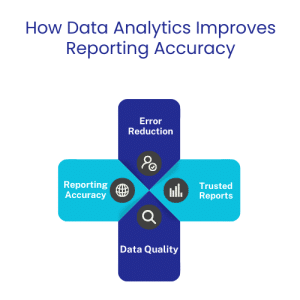
Reporting Accuracy
Accurate reporting reflects real business performance without distortion. It ensures numbers remain consistent across different reports and time periods. Clear and precise reporting reduces confusion. This supports confident decision making.
Data Quality
Data quality depends on accuracy, completeness, and consistency. Clean data prevents gaps and mismatched values in reports. Well structured information improves analysis. Reliable data leads to meaningful insights.
Error Reduction
Manual reporting often introduces calculation and formatting errors. Structured processes help reduce these risks. Automation ensures the same logic is applied every time. This improves reporting stability.
Trusted Reports
Trusted reports increase confidence among stakeholders. When data remains consistent, teams rely on insights more easily. Reliable reporting supports planning and evaluation. Trust strengthens data driven decisions.
What Makes a Performance Report Useful and Actionable
A useful performance report does more than present numbers. It tells a clear story about what is happening and why it matters. Analytics helps connect data points into patterns that explain performance. Actionable reports focus on insights rather than volume. They highlight changes, comparisons, and outcomes that require attention. Good reporting also considers the audience and presents information in a way that supports understanding.
Analytics helps transform reports from static documents into decision support tools. When reporting is aligned with performance tracking goals, it becomes a guide rather than a summary.
Common Challenges in Performance Tracking and Reporting
Many organizations struggle with performance tracking due to unclear objectives or fragmented data. Analytics cannot compensate for poorly defined goals. When performance indicators are vague, reporting loses direction.
Another challenge is data overload. Tracking too many metrics can dilute focus and create confusion. Analytics works best when it simplifies rather than complicates understanding.
Inconsistent data sources also affect reporting reliability. When information is collected differently across systems, analytics must first resolve these inconsistencies before insights can emerge.
How Structured Analytics Supports Continuous Improvement
Performance tracking is not a one time activity. Data Analytics supports continuous improvement by enabling regular review and adjustment. When performance is tracked consistently, small changes become visible before they turn into larger issues.
Analytics allows organizations to test approaches, observe outcomes, and refine strategies. This feedback loop is essential for long term improvement. Reporting plays a key role in this process by documenting progress and change.
Structured analytics ensures that improvement efforts are measured and validated rather than assumed. This creates a culture of learning and adaptation.
Conclusion
Data analytics provides the foundation for meaningful performance tracking and reporting. It turns scattered data into structured insight and helps organizations understand how actions translate into results. Performance tracking becomes valuable when analytics connects metrics to purpose and reporting communicates insight clearly.
When applied thoughtfully, data analytics supports accuracy, transparency, and continuous improvement. It allows performance to be understood over time and decisions to be made with confidence. In a data driven environment, effective performance tracking and reporting are not optional, they are essential.
Frequently Asked Questions (FAQs)
Why do my sales reports show different numbers in different tools
This usually happens due to mismatched data sources or tracking methods. Analytics helps align data so reports reflect the same reality.
How can I trust my ecommerce reports before making pricing decisions
Trust comes from validated and consistent data. Analytics ensures numbers are checked and structured before decisions are made.
What causes sudden changes in reports without any business changes
Sudden changes often result from tracking issues or data gaps. Analytics helps detect anomalies and explain unexpected shifts.
How do businesses check if their reports are actually accurate
Businesses compare data across sources and validate key metrics. Analytics highlights inconsistencies before reports are shared.
Why do teams argue over numbers in performance meetings
Different data definitions and manual reporting cause confusion. Analytics standardizes reporting so everyone sees the same data.