


In eCommerce, data analytics has become the backbone of how online businesses grow, compete, and improve performance. Every click, search, cart action, and purchase creates valuable data that reveals customer intent and business trends. With the support of an eCommerce analyst, this data is structured and interpreted to uncover meaningful insights that guide smarter decisions. Instead of relying on assumptions, eCommerce teams can understand real customer behavior, optimize operations, and track measurable outcomes. This is where analytics moves beyond simple reporting and becomes a powerful decision making tool.
Ecommerce Analytics to Understand Customer Behavior and Drive Sales
In eCommerce, Data analytics is the practice of collecting, organizing, and interpreting data generated across digital storefronts, marketing platforms, logistics systems, and customer interactions. It connects raw data with business understanding.
Analytics in this space typically supports product planning, pricing decisions, customer experience improvement, and inventory control. Unlike generic reporting, eCommerce analytics focuses on user journeys, conversion paths, and lifetime value. Many businesses rely on structured data analytics services to bring clarity across these fragmented data points without relying on isolated dashboards.
Why Is Data Analytics Critical for Online Store Growth?
Growth in eCommerce is rarely linear. Traffic may increase while conversions fall, or sales may rise while profit shrinks. Data analytics explains why this happens.
When analytics is applied consistently, it helps businesses understand which channels bring quality traffic, which products actually drive margins, and where customers abandon the buying journey. Business intelligence services play a role here by transforming operational data into insights that decision makers can act on without technical dependency.
Analytics also supports scalability. As stores grow across regions and platforms, data becomes the only reliable way to maintain consistency and performance control.
Key eCommerce Data Sources That Power Analytics
ECommerce analytics depends on data coming from multiple systems. Understanding these sources is essential before any advanced analysis begins.
- Website and app behavior data including sessions, clicks, and navigation paths
- Transactional data such as orders, returns, refunds, and payment methods
- Marketing data from ads, email campaigns, and organic traffic
- Customer data including profiles, purchase history, and support interactions
- Operations data related to inventory, delivery, and fulfillment timelines
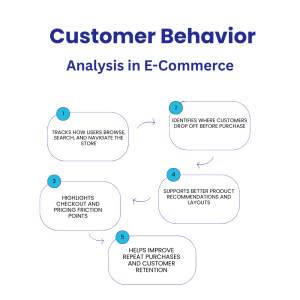
Customer Behavior Analysis in eCommerce
Customer behavior analysis tracks how users browse, click, and purchase products online. These insights help businesses understand preferences and improve conversions.
Understanding Customer Behavior in Online Stores
By analyzing user interactions, businesses can identify buying patterns and drop-off points. This helps improve site experience and customer satisfaction.
How Customers Interact With eCommerce Platforms
This focuses on how users navigate pages, view products, and complete checkouts. Understanding these actions helps optimize website design and flow.
Analyzing Customer Actions in eCommerce
Tracking actions like searches, cart additions, and purchases reveals customer intent. These insights support better targeting and personalization.
Customer Journey Insights in eCommerce Analytics
Customer journey analysis shows the path from first visit to purchase. It helps identify friction points and improve overall marketing performance.
Sales and Revenue Insights Through Advanced Analytics
Sales data alone does not explain performance. Analytics connects revenue numbers with context.
- Identifying high performing products versus high volume but low margin items
- Understanding seasonal demand and regional buying trends
- Measuring discount impact on profitability rather than just order volume
- Tracking customer lifetime value instead of one time purchases
Advanced analytics solutions allow teams to forecast demand, plan inventory, and avoid over reliance on discounts. Predictive modeling services are often used here to estimate future sales based on historical and behavioral data.
How Does Predictive Analytics Improve eCommerce Decisions?
Predictive analytics uses historical data patterns to anticipate future outcomes. In eCommerce, this is especially valuable because customer behavior is dynamic.
Predictive analytics helps businesses forecast demand, reduce stockouts, and manage supply chains more effectively. It can also estimate churn risk, helping brands focus retention efforts on customers who are likely to disengage.
Many large platforms rely on predictive analytics services and AI Data analytics services India capabilities to automate decision making at scale while still maintaining accuracy.
Role of Dashboards and Visualization in eCommerce Analytics
Data becomes useful only when it is understandable. Dashboards translate complex analytics into visual formats that support faster decisions.
- Real time tracking of sales, traffic, and conversions
- Clear visibility into marketing performance by channel
- Monitoring inventory movement and fulfillment delays
Analytics dashboard development focuses on clarity rather than volume. Data visualization services help teams spot trends, anomalies, and opportunities without digging into raw datasets.
How eCommerce Teams Use Analytics for Data Driven Decisions
Data driven decision services support daily and long term planning in eCommerce. Instead of reacting to short term fluctuations, teams rely on patterns and insights.
Analytics guides pricing changes, marketing budget allocation, expansion planning, and customer engagement strategies. End to end analytics solutions ensure that decisions are aligned across departments rather than made in isolation.
Cloud analytics services India have also made it easier for growing eCommerce businesses to scale analytics without heavy infrastructure investments.
Conclusion
Data analytics in eCommerce is no longer optional. It shapes how businesses understand customers, manage operations, and plan growth. From customer behavior analysis to predictive insights and visualization, analytics connects actions with outcomes. When data is integrated, analyzed, and applied thoughtfully, eCommerce businesses gain clarity in a competitive and fast changing digital environment. The real value of analytics lies not in tools or reports, but in how consistently insights are used to guide decisions.
Frequently Asked Questions (FAQs)
How do customers usually navigate an eCommerce website?
Customers start from the homepage and move through categories to product pages before checkout. Smooth navigation helps users find products faster and reduces frustration.
Which pages do users visit the most?
Category and product pages attract the highest traffic as users compare options. The cart page also sees frequent visits before purchase decisions.
Where do customers usually drop off during navigation?
Drop-offs often occur on product pages or during checkout due to confusion or delays. Poor navigation and slow loading increase exit rates.
How do users move between products on an eCommerce site?
Users browse using menus, filters, search bars, and recommendations. Easy switching between products improves engagement and discovery.
Does website navigation affect purchase decisions?
Clear navigation builds trust and confidence while shopping. Complicated navigation can cause users to abandon purchases.