

Introduction
Every business creates data. Customer purchases, website visits, mobile apps, marketing campaigns, financial records, and business operations all generate valuable information every day.
The challenge is not collecting data. The real challenge is turning that data into useful insights that help businesses grow.
Many companies still rely on old systems that store data in different places. Teams spend hours collecting reports instead of analyzing information. This slows decision-making and creates unnecessary costs.
A Big Data Stack solves this problem. It connects data from different sources, processes it quickly, stores it securely, and makes it available for analytics and reporting.
Today’s businesses also need faster insights. Customers expect better experiences, markets change quickly, and leaders must make decisions with confidence. A modern data platform helps organizations respond to these changes in real time.
The Modern Data Stack combines cloud technologies, data engineering, business intelligence, and Artificial Intelligence into one connected ecosystem. Instead of working with outdated reports, teams can access reliable information whenever they need it.
Companies that build a modern data stack improve productivity, reduce operational costs, and make better business decisions. They also create a strong foundation for AI, machine learning, and predictive analytics.
In this guide, you will learn what a modern data stack is, how it works, its main components, the best tools available, and how it helps businesses become truly data-driven.
What Is a Modern Data Stack?
A Modern Data Stack is a collection of cloud-based tools that help businesses collect, store, transform, analyze, and visualize data. It replaces traditional data systems with a faster, more flexible, and scalable approach.
In the past, organizations depended on on-premise databases and manual reporting. These systems often required large IT teams and expensive hardware. As data volumes increased, they became difficult to manage.
Modern data stacks solve these problems by using cloud technology and automation.
A typical modern data stack includes several connected layers. Data is collected from different sources, moved through secure pipelines, transformed into a usable format, stored in a cloud data warehouse or lakehouse, and finally presented through dashboards and reports.
This process gives decision-makers access to accurate and up-to-date information.
Unlike traditional systems, modern data stacks allow businesses to scale quickly. They support real-time analytics, Artificial Intelligence, and machine learning without major infrastructure investments.
This is why organizations across industries are moving from legacy systems to modern cloud-based data platforms.
Traditional Data Stack vs Modern Data Stack
Traditional Data StackModern Data StackOn-premise infrastructureCloud-based architectureManual data processingAutomated data pipelinesLimited scalabilityHighly scalableSlow reportingReal-time analyticsHigh maintenance costsLower operational costsSeparate systemsConnected data ecosystem
A modern data stack is no longer just a technology upgrade. It is a business strategy that helps organizations become faster, smarter, and more competitive.
Why Businesses Need a Modern Data Stack
Businesses generate more data today than ever before. Without the right technology, this information remains scattered across different systems and departments.
A modern data stack brings all business data together. It creates one reliable source of information that every team can use.
Here are the biggest reasons why organizations are investing in modern data platforms.
Faster Decision-Making
Business leaders need answers quickly. A modern data stack provides real-time dashboards and reports that help executives make informed decisions without waiting for manual updates.
Better Customer Insights
Customer data comes from websites, mobile apps, CRM systems, and marketing platforms. A connected data stack combines this information to create a complete customer view.
This helps businesses improve customer experience and deliver personalized services.
Scalability
As organizations grow, their data grows too. Cloud-based platforms make it easy to store and process large amounts of information without replacing existing infrastructure.
Improved Data Quality
Modern data pipelines automatically clean and organize information before it reaches reporting tools. This improves accuracy and reduces errors.
Stronger AI and Analytics
Artificial Intelligence depends on high-quality data. A modern data stack provides clean and structured information that supports machine learning models, predictive analytics, and intelligent automation.
Lower Operational Costs
Automation reduces manual work and improves efficiency. Businesses spend less time preparing reports and more time making strategic decisions.
Companies that invest in modern data platforms gain a competitive advantage because they can respond faster to market changes and customer needs.
How Wisecor Transformations Helps Businesses Build Modern Data Stacks
Building a modern data stack requires more than selecting the right tools. Businesses also need a clear strategy, experienced data engineers, and a scalable architecture.
Wisecor Transformations helps organizations design and implement modern data platforms that support business growth and digital transformation.
Our experts work with businesses to understand their goals before creating a customized data strategy. We help organizations integrate data from multiple sources, build secure cloud architectures, automate data pipelines, and create interactive business intelligence dashboards.
Our core services include:
- Data Engineering
- Cloud Data Analytics
- Business Intelligence Solutions
- Artificial Intelligence & Machine Learning
- Data Analytics Consulting
- Data Integration
- Data Governance
- Executive Dashboards
- Digital Transformation
Instead of simply delivering reports, we help businesses build a connected data ecosystem that supports faster decisions, better customer experiences, and long-term growth.
Modern Data Stack Architecture
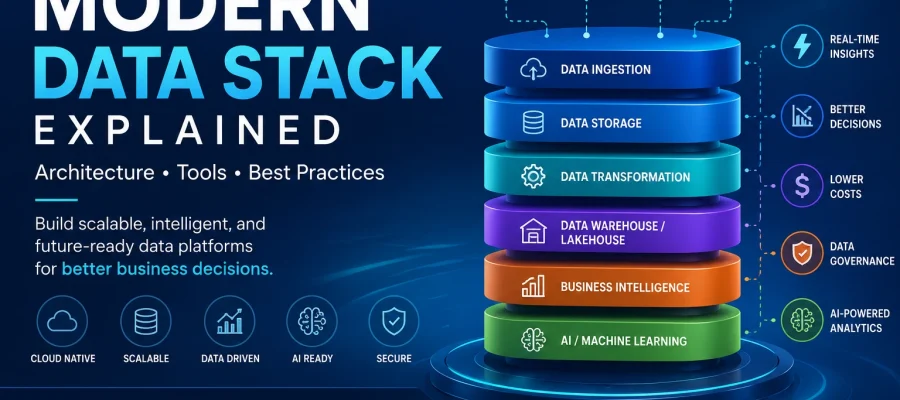
A modern data stack is built using several connected layers. Each layer performs a specific task and passes data to the next stage. Together, these layers create a reliable system for collecting, processing, storing, and analyzing business data.
The architecture is flexible and cloud-based, making it easier to scale as business needs grow.
The typical flow looks like this:
Data Sources → Data Ingestion → Data Storage → Data Transformation → Data Warehouse/Lakehouse → Business Intelligence → Artificial Intelligence & Machine Learning
Let’s understand each layer.
Data Sources
Every business has multiple sources of data. These may include CRM systems, ERP software, websites, mobile apps, marketing platforms, IoT devices, spreadsheets, and third-party applications.
A modern data stack collects information from all these sources into one centralized platform.
Data Ingestion
The ingestion layer moves data from different systems into the cloud. This process can happen in real time or at scheduled intervals.
Modern tools automate this process, reducing manual work and improving accuracy.
Data Storage
Once data is collected, it is stored securely in cloud storage or a data lake. This layer keeps both structured and unstructured data ready for future use.
Data Transformation
Raw data often contains duplicates, missing values, and inconsistent formats. The transformation layer cleans and organizes this information before analysis.
This ensures that reports and dashboards are based on reliable data.
Data Warehouse or Data Lakehouse
After transformation, the data is stored in a warehouse or lakehouse. These platforms support fast queries and large-scale analytics.
Business users can access trusted information without affecting operational systems.
Business Intelligence Layer
Business Intelligence tools convert complex data into dashboards, charts, and reports. Executives can monitor KPIs and business performance through interactive visualizations.
Artificial Intelligence and Machine Learning
The final layer uses clean business data to build predictive models, automate decisions, and generate intelligent recommendations.
This helps organizations move from reactive reporting to proactive decision-making.
Core Components of a Modern Data Stack
Although every organization builds its data platform differently, most modern data stacks include the same core components.
Data Integration
Data integration combines information from different business applications into one central platform. This removes data silos and improves collaboration between departments.
ETL and ELT
ETL stands for Extract, Transform, and Load.
ELT stands for Extract, Load, and Transform.
Modern cloud platforms often use ELT because it processes large volumes of data more efficiently.
Data Warehouse
A data warehouse stores structured business data for reporting and analytics. It delivers fast performance and supports business intelligence tools.
Data Lake
A data lake stores raw information in its original format. Businesses use it for machine learning, Artificial Intelligence, and advanced analytics.
Data Orchestration
Orchestration tools automate data workflows. They ensure that every process runs in the correct order without manual intervention.
Data Governance
Governance helps businesses maintain data quality, security, compliance, and consistency across the organization.
Together, these components create a reliable and scalable data ecosystem.
Popular Modern Data Stack Tools
Choosing the right tools depends on business size, budget, and technical requirements. However, some platforms have become industry standards because they are reliable and easy to scale.
CategoryPopular ToolsData IntegrationFivetran, AirbyteData TransformationdbtData WarehouseSnowflake, Google BigQuery, Amazon RedshiftData LakehouseDatabricksStreamingApache KafkaData ProcessingApache SparkWorkflow AutomationApache AirflowBusiness IntelligencePower BI, Tableau, LookerCloud PlatformsMicrosoft Azure, AWS, Google Cloud
These tools work together to create a complete modern data platform that supports reporting, analytics, and Artificial Intelligence.
Benefits of a Modern Data Stack
Businesses invest in modern data stacks because they improve efficiency, reduce costs, and support better decision-making.
Here are the biggest advantages.
Faster Analytics
Teams no longer wait hours or days for reports. Information becomes available in near real time.
Better Scalability
Cloud platforms grow with your business. Organizations can manage increasing data volumes without replacing their infrastructure.
Improved Data Quality
Automated validation and transformation reduce errors and improve reporting accuracy.
Lower Operational Costs
Automation removes repetitive tasks and reduces manual effort. This improves productivity across the organization.
AI-Ready Infrastructure
Modern data stacks provide the clean, organized data required for Artificial Intelligence, machine learning, and predictive analytics.
Better Business Decisions
Executives receive accurate dashboards and reports that support faster and more confident decisions.
Organizations with a modern data stack can respond quickly to market changes, customer needs, and new business opportunities.
Challenges of Implementing a Modern Data Stack
Building a modern data stack offers many benefits, but the process also comes with challenges. Businesses must plan carefully to get the best results.
Understanding these challenges helps organizations avoid common mistakes and build a reliable data platform.
Data Integration
Many companies use different software for finance, sales, marketing, and operations. Bringing all this data together can be difficult without the right integration strategy.
Data Quality
Poor-quality data leads to inaccurate reports and unreliable insights. Businesses must clean, validate, and standardize their data before using it for analytics.
Data Security
Business data contains sensitive customer and financial information. Strong security controls, encryption, and access management are essential for protecting this data.
Data Governance
As data grows, organizations need clear policies for ownership, compliance, and quality management. Good governance ensures that everyone works with trusted information.
Skills and Expertise
Modern data platforms use cloud technologies, automation, and Artificial Intelligence. Many organizations lack the internal skills needed to build and manage these systems.
Working with an experienced data consulting partner helps businesses overcome these challenges while reducing implementation risks.
How Wisecor Transformations Helps Businesses Build Modern Data Stacks
Technology alone does not create a successful data strategy. Businesses also need expert guidance, the right architecture, and scalable solutions.
Wisecor Transformations helps organizations design, implement, and optimize modern data platforms that support long-term business growth.
Our team works closely with clients to understand their goals before recommending the best technology stack.
Our services include:
- Data Engineering
- Cloud Data Analytics
- Business Intelligence Solutions
- Artificial Intelligence & Machine Learning
- Data Analytics Consulting
- Predictive Analytics
- Executive Dashboards
- Data Governance
- Digital Transformation
We help businesses integrate data from multiple systems, automate reporting, improve data quality, and create dashboards that support faster decision-making.
Instead of working with disconnected systems, organizations gain a unified data platform that improves efficiency, collaboration, and business performance.
Whether you are building a new data platform or modernizing an existing one, Wisecor Transformations provides the expertise needed to achieve measurable results.
The Future of Modern Data Stacks
Modern data platforms continue to evolve as businesses adopt Artificial Intelligence and cloud technologies.
The future will focus on automation, real-time analytics, and intelligent decision-making.
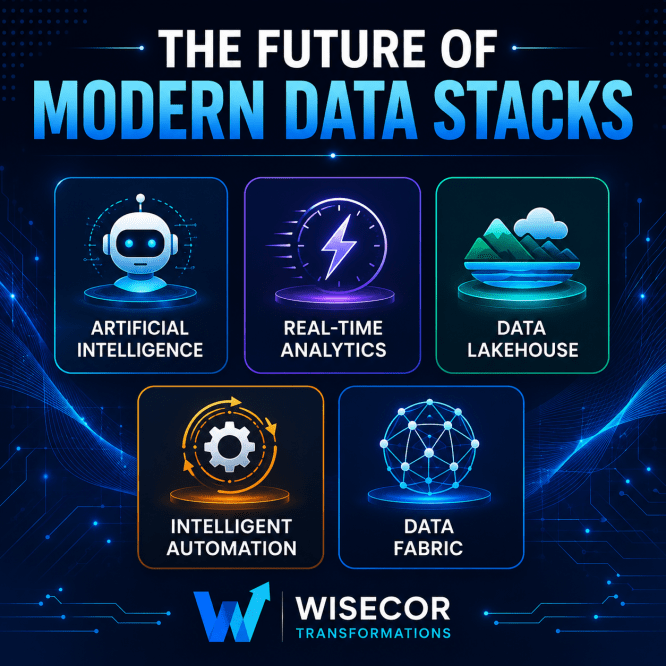
Here are the biggest trends shaping the next generation of data platforms.
Artificial Intelligence
AI will automate data analysis, identify patterns, and generate business recommendations within seconds.
Real-Time Analytics
Organizations will rely on live dashboards instead of historical reports. This allows leaders to respond quickly to changing business conditions.
Data Lakehouse
More businesses are moving toward lakehouse architecture because it combines the flexibility of a data lake with the performance of a data warehouse.
Intelligent Automation
Automation will reduce manual work across data engineering, reporting, and business intelligence.
Data Fabric
Data Fabric will connect information across cloud and on-premise environments, making enterprise data easier to access and manage.
Businesses that invest in these technologies today will be better prepared for tomorrow’s challenges.
Conclusion
Data has become one of the most valuable business assets. However, collecting information is only the first step. Organizations also need the right technology to transform that data into meaningful insights.
A Big Data Stack provides the foundation for modern analytics. It helps businesses collect, process, store, and analyze data efficiently while supporting Artificial Intelligence and Business Intelligence initiatives.
Companies that invest in modern data platforms improve operational efficiency, make faster decisions, and gain a competitive advantage.
Building the right architecture requires careful planning, strong governance, and experienced professionals.
Wisecor Transformations helps organizations build scalable, secure, and future-ready modern data stacks. From data engineering and cloud analytics to AI-powered business intelligence, we deliver solutions that turn business data into measurable growth.
The future belongs to organizations that make decisions based on reliable data. Investing in a modern data stack today prepares your business for long-term success.
Frequently Asked Questions
1. What is a Modern Data Stack?
A modern data stack is a cloud-based collection of tools that helps businesses collect, store, transform, analyze, and visualize data for reporting, analytics, and Artificial Intelligence.
2. Why is a Modern Data Stack important?
It improves data quality, speeds up decision-making, supports business intelligence, and provides a scalable foundation for AI and advanced analytics.
3. What are the main layers of a Big Data Stack?
The main layers include data sources, data ingestion, data storage, data transformation, data warehouse or lakehouse, business intelligence, and Artificial Intelligence.
4. Which tools are commonly used in a Modern Data Stack?
Popular tools include Snowflake, Databricks, Apache Spark, Apache Kafka, dbt, Airflow, Power BI, Tableau, Google BigQuery, and Amazon Redshift.
5. How can Wisecor Transformations help build a Modern Data Stack?
Wisecor Transformations offers Data Engineering, Cloud Data Analytics, Business Intelligence, Artificial Intelligence, Machine Learning, Predictive Analytics, Data Governance, and Digital Transformation services. These solutions help businesses create secure, scalable, and high-performing modern data platforms.